Somewhere around the late 1990s, car keys quietly stopped being simple pieces of cut metal. Manufacturers began embedding a tiny transponder chip in the plastic head of the key, and pairing it with an immobilizer in the car. From then on, starting a car has required two proofs at once: a blade cut to the right shape, and a chip the car recognizes as its own.
That change is why a copy made in two minutes at a hardware counter can open your door, turn in the ignition, and then do nothing at all. The copy is accurate. It is just missing the second half of the credential.
How the handshake works
The transponder chip needs no battery of its own. When you turn the key, a ring antenna around the ignition sends out a low-power signal that wakes the chip, and the chip answers with an identification code. The car's computer compares that code against the codes it has stored. Match, and the fuel and ignition systems stay enabled. No match, and the engine either will not crank or starts and dies within seconds, depending on the system.
This is also why a dead fob battery and a failed chip are different problems. On push-button cars, the fob's battery powers its radio for lock and unlock at a distance, but most fobs carry a passive backup that the car can read at close range, which is why holding a dead fob against the start button often works. The owner's manual names the exact spot for your model, and it is worth knowing before a Monroe parking lot teaches you.
Three kinds of copy, three different results
| Type of copy | Opens the door | Starts the engine |
|---|---|---|
| Plain metal copy of a transponder key | Yes | No, the chip is missing |
| Cloned transponder key | Yes | Yes, it copies an existing key's code |
| New key programmed to the car | Yes | Yes, and the car can forget lost keys at the same visit |
| Spare for a pre-transponder car | Yes | Yes, the blade is the whole credential |
Cloning reads the code from a working key and writes it to a blank chip, which is quick when you have a key to clone. Programming registers a fresh code with the car itself, which is the route when every key is lost, and it has a security bonus: keys that are no longer in your possession can be removed from the car's memory during the same session, so a lost key stops being a working key.
Motorcycles, antiques, and the edges of the system
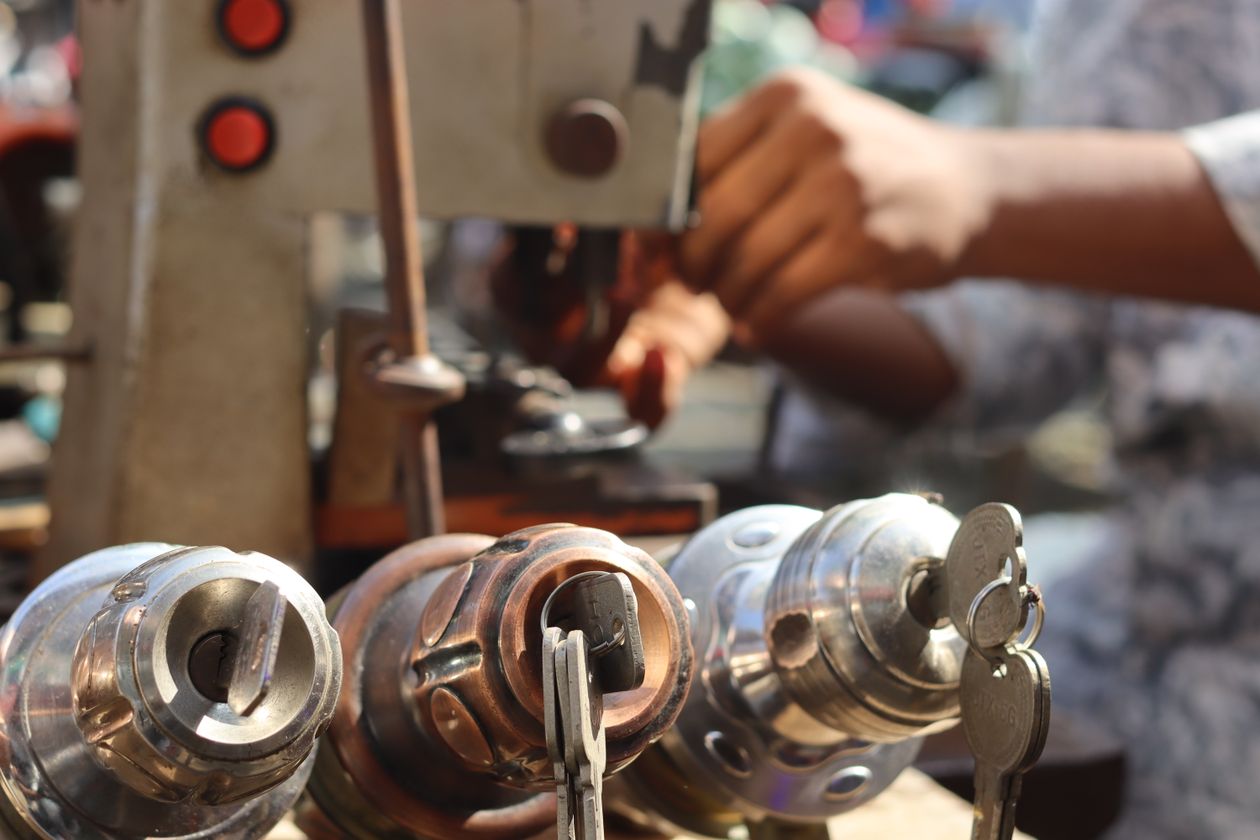
The same split shows up beyond cars. Many motorcycles use chipped keys now, while older bikes take a plain blank that is getting harder to find as blank stocks thin out. Antique keys are the opposite problem: no electronics at all, but worn locks, unusual blanks, and keys that must sometimes be made by hand-fitting to a lock that has had decades to wear. A locksmith who cuts car keys, motorcycle keys, and antique keys is working in three different crafts that happen to share a key machine.
What to ask before you order a spare
Ask whether the price covers cutting and programming, or cutting alone, because the two are sometimes quoted separately. Ask whether lost keys will be deleted from the car at the same visit if that is part of why you are calling. And ask before the work starts, not after, because the time to compare a dealer quote against a locksmith quote is while you still have a working key in your hand. Once the last key is gone, every option gets slower and pricier, and the car usually has to be opened and worked on where it sits.
For drivers in Monroe, the practical rule is simple: the day you buy a car with one key is the day to make the second one. It is the cheapest that job will ever be.
Common questions
My copy turns the ignition but the car will not start. Is the copy cut wrong?
Probably not. A copy that turns smoothly has the right cut; a no-start with a fresh copy usually means the chip was not cloned or programmed, so the immobilizer is doing its job.
Can a lost key be made useless?
Yes. When a new key is programmed to the car, the stored codes can be cleared and relearned with only the keys present, so a missing key keeps its blade but loses its electronic permission.
Does the dealer have to make transponder keys?
No. Locksmiths with programming equipment make and program transponder keys at the car for most makes, including cases where every key has been lost.
Photos in this guide are representative stock images.
← All guides from AAA Locksmith← Back to AAA Locksmith